
Oral Treatment For Dry Eyes

Scientists in Japan have made an important discovery that could revolutionize treatment for people suffering from dry eye syndrome.
Researchers found that an extract from the South American maqui berry can mitigate an underlying factor in dry eye syndrome—leading to significant improvements in symptomsand quality of life.
This represents a noteworthy improvement over commercial eye drops, which contain ingredients that some people are allergic to and only provide temporary relief.1
This unique oral approach is capable of relieving dry eyes by supporting natural tear production. That means you can take a single capsule once daily and experience soothing, youthful tear production day in and day out.
No other known natural oral treatment is capable of boosting aqueous tear fluid secretionand enhancing the function of the tear film like this. Patients with dry eye symptoms have found lasting improvements in eye comfort.
Compelling scientific studies demonstrate how maqui berry extract capitalizes on your body’s own natural mechanisms to boost tear output, restore comfort, and add a youthful shine to your eyes.
What Is Dry Eye Syndrome?
Dry eye syndrome occurs when your body doesn’t produce enough tears to keep your eyes moist. The resulting stinging, itching, sensitive eyes can lead to eye damage2—and can negatively impact your quality of life. A 2014 study found that people with dry eye syndrome had significantly lower scores on a standard mental health scale and lower quality of life.3,4
Dry eye syndrome is incredibly common, especially with advancing age and most especially in older women.5-7 Recent studies show that dry eye syndrome is on the rise both in America2,8 and around the world9—especially as more and more adults use computers, wear contact lenses, and undergo vision-correcting LASIK or cataract surgery.2,6,10-13
Untreated or inadequately treated dry eye syndrome can lead to damage to the cornea (the thin outermost region over the lens) and conjunctiva (the lubricating cell layer that lines the eyeball and inner surfaces of the lids).2 Making matters worse, corneal injuries (even a slight scratch) don’t heal as well when the eye is dry to begin with.14
In fact, dry eye syndrome can produce a vicious cycle in which poor tear production leads to inflammation that damages the eye surface and tear glands, leading to further loss of tear production and further damage.15
While no single biological cause of dry eye syndrome is yet known, we do know that chemical stresses and those induced by the high ultraviolet light exposure of the eye are at least in part to blame.16,17
But regardless of the trigger, dry eyes ultimately result from a simple imbalance: too little production of tears, or too rapid evaporation of tears on the surface of the eye.2,18,19
That’s what makes research into maqui berry extract so exciting: This extract directly enhances your body’s ability to make tears. This treatment has been found to address the cause of dry eyes—with research proving its use leads to long-lasting improvements in eye comfort.9
The Problem With Eye Drops
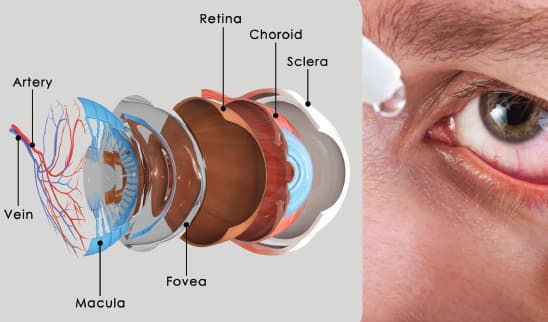
It can be difficult to imagine an oral treatment having such a profound impact on tear production. This is because mainstream medicine’s preferred treatments for dry eye syndrome are in the form of eye drops, both over-the-counter and prescription.
In fact, according to a recent estimate, Americans spend about a third of a billion dollars on over-the-counter eye drops, or “artificial tears,” each year.2 That’s a substantial investment in a product that produces only short-term relief but that has no long-lasting effect.20,21
Eye drops are the most recommended solution mainstream medicine offers for dry eye syndrome. This is problematic for multiple reasons. For starters, commercial, synthetic eye drops are often loaded with chemicals which may cause stinging and other unpleasant side effects.22,23 They often require frequent re-application in order to provide any relief at all. But that’s the least of their problems.
Some eye drops contain a vasoconstrictor in order to help with the discomfort of dry eyes. The main ingredient in such drops is usually tetrahydrozoline. While it has been shown to improve the redness associated with dry eyes after a single use, its effectiveness diminishes over a 10-day period, potentially encouraging overuse of the product.24
Chronic use of tetrahydrozoline has been shown to induce clinically important changes to the cornea in up to 27% of users.25 Worse, studies show that these eye drops can produce both acute and chronic conjunctivitis (inflammation of the conjunctiva, or mucosal layer that surrounds the eyeball).26 Tetrahydrozoline also has significant toxicity if ingested.27
Aside from being extremely expensive, prescription eye treatments such as Restasis®come with side effects ranging from eye redness and discharge to watery eyes, eye pain, feeling of a foreign body in the eye, itching, stinging, and blurred vision. In one study,54.2% of subjects experienced eye discomfort while using these drops, and 4.2%discontinued use entirely because of side effects.28
WHAT YOU NEED TO KNOW
 |
Oral Treatment For Dry Eyes
- Dry eye syndrome is common, especially as we grow older.
- Loss of moisture from the eye can lead to serious medical consequences, as well as producing frustration, anxiety, and even depression.
- Over-the-counter eye drops produce only temporary relief.
- Prescription eye drops can be expensive, and may produce side effects.
- Recent discoveries show that protective plant compounds from the rugged South American maqui berry can reduce light-induced damage to the tear glands, enhance tear production, and improve quality of life.
- Omega-3 fatty acids are the perfect pairing with maqui berry extract because they boost production of the oily layer, thereby improving the integrity of the tear film and slowing the evaporation of tears.
- This scientific breakthrough now allows you to soothe dry, irritated eyes with an oral, once-a-day supplement made from maqui berries.
Getting To The Bottom Of Dry Eyes
The super-thin layer of moisture that covers our eyes is crucial for proper eye lubrication and function. The tear film, as it is called, consists of three layers that are interactive: mucous, water, and oil.2
- Closest to the eye, directly over the cornea, lies the mucin layer, which provides lubrication and protection to the cornea. Insufficient mucous can lead to dry spots on the surface of the eye.2,29
- Next, moving outward, is the watery layer, which consists of water and salt, and is produced by the lacrimal glands.30
- At the outermost surface lies the oily lipid layer, which is secreted from glands on the edge of your eyelids called the Meibomian glands.31,32
Two leading characteristics of dry eye syndrome are either insufficient watery tear production from thelacrimal (tear-producing) gland or insufficient oil production from the Meibomian (oil-producing) glands.17 The oily layer covers the watery layer in order to prevent evaporation of water from the surface of the eye. Insufficient oil production, then, permits excessively rapid loss of watery tears from the layer below.
The most obvious and most natural way to relieve dry eye symptoms is to increase the rate of tear production in the lacrimal glands. Recent studies show that maqui berryextract can get to the root of dry eye syndrome by boosting tear production. This is accomplished from inside your body—no eye drops, no side effects, no discomfort—just soothing relief for dry, irritated eyes.
WHY TEARS ARE IMPORTANT FOR EYE HEALTH
 |
We conventionally think of tears as the fluid our eyes produce when we cry. In reality, tear fluid constantly flows across the surface of your eye and is essential for the health of the eye.
Tear fluid contains numerous compounds that are essential for a healthy eye.
Tear fluid contains glucose, which nourishes the cornea, the clear layer that covers the lens, iris, and pupil.9 Because the cornea lacks its own blood vessels,42,43 nutrition only comes from the fluids that have direct contact such as tears and fluid inside the eyes.44
Tears are also rich in protective compounds such as ascorbic acid (vitamin C), glutathione (a sulfur-containing, free-radical fighting compound essential in most tissues), and several vital amino acids with the capacity to fight free radicals. This is important because the corneal surface, which is devoid of blood flow, is directly exposed to air, where oxidation is brisk.9,45
In addition, tear fluid also contains antimicrobial compounds, particularly a protein called lipocalin, which tightly binds to compounds secreted by bacteria and scavenges foreign oily materials that could otherwise damage the cornea.9
With this in mind, you can see how simply adding saline drops to your eyes to treat dry eye syndrome, while adding moisture to the eye, would do nothing to support the nourishment necessary for eye health. The only way to do that is to increase your body’s own natural tear production from the inside out.
That’s exactly what maqui berry does, boosting tear fluid secretion and enhancing the actual function of the tear film.
How Maqui Berry Extracts Boost Tear Production To Soothe Dry Eyes
Maqui berries are hardy natives of temperate rainforest regions of Chile and adjacent regions of southern Argentina.33-35 While little known in North America, these small berries have a long history of use in traditional medical systems of the region, where they have been used to treat diarrhea, inflammation, and fever.34,36
Japanese scientists were the first to isolate the active components and to show their power in fighting dry eye syndrome.9,37
Research now shows that a standardized extract of maqui berries (Aristotelia chilensis) contains plant chemical compounds (anthocyanins) known as delphinidins that have two powerful eye-protective actions:
- They inhibit damage to delicate tissues like the photoreceptor cells, caused by light stimulation, and
- They shield eye structures from constant exposure to reactive oxygen species.37
Together, these effects reduce chronic low-grade injury to the lacrimal glands, improving its ability to make tears. Additional mechanisms are not yet known, but animal studies show that delphinidins restore tear production by the lacrimal glands.19
Researchers examined the effects of maqui berry extract in a rat model of dry eye, in which animals’ blink reflex was suppressed to allow excessive evaporation from the eye surface. They found that pre-treatment with maqui berry extract significantly prevented reduction of tear secretion that was seen in a control group.19 The larger the dose, the greater the effect of the extract, with 40 mg/kg per day demonstrating the maximum effect. And, while control animals experienced considerable damage to their corneas in terms of corneal opacity from the prolonged dry eye periods, the animals treated with maqui berry extract had clear eyes and no additional corneal opacities throughout the study period.
HOW BLINKING IMPACTS DRY EYE SYNDROME
 |
Dry eye syndrome is a common age-related eye problem. However, a number of increasingly common factors have led to skyrocketing numbers of dry eye syndrome sufferers even in much younger individuals. These include dry environments, contact lens use, LASIK surgery, computer use—and even eye drops themselves.
What many of these triggers have in common is that they lead to an increase in tear concentration ultimately caused by a reduction in blinking rate.5,6,11,12,15,52,53
Blinking is nature’s own squeegee. With each blink, the eyelid sweeps across the eye, distributing tear fluid and brushing away microscopic residue. But intense mental concentration—especially on a computer screen, for example—slows the blinking rate significantly.13,54
Reduction in blinking rate leads to excess evaporation of tear water from the surface of the eye.53 Contact lenses are also strongly associated with increased evaporation of tear water.52
Air pollution, tobacco smoke (both first- and second-hand), and some drugs increase the oxidative stress at the eye’s surface, while LASIK surgery, a miraculous boon to millions, has the side effect of reducing tear production.2
The total amount of tears produced per day is tiny, normally ranging from less than 1 mL to just over 3 mLper eye.9 That minute rate of tear production, coupled with the surface area of the eye, poses a huge problem in physics: Rapid evaporation of pure water can leave the tear fluid excessivelyconcentrated.5,15,55 And that, in turn, impairs many of the tear film’s functions, not the least of which is an insufficient amount of liquid on the delicate eye surface.
By boosting tear fluid secretion and enhancing the actual function of the tear film, South American maqui berry extract is able to restore the composition of your tears, leading to relief from the symptoms of dry eye syndrome.
Human Study Demonstrates Long-Term Benefits
People who suffer from dry eye syndrome know that its symptoms—including burning, eye fatigue, sensitivity to light, blurred vision, and stringy mucous—can have a significant impact of their quality of life.2 With this in mind, Japanese researchers wanted to determine if maqui extract could positively impact quality of life and eye comfort in addition to increasing tear production. They found it can do both.
For this impressive study, 13 healthy volunteers with moderately dry eyes (according to Schirmer’s test) took either 30 or 60 mg of maqui extract daily and were evaluated at 30 and 60 days.9
After 30 days, subjects in both groups experienced similar improvement in tear production, with the 30 mg group experiencing a 50% improvement, and the 60 mg group experiencing a 48% improvement. However, after 60 days, it became clear that the higher dose was more effective for long-term use.
After 60 days of treatment, tear production decreased towards baseline levels in the 30 mggroup. By contrast, subjects taking 60 mg daily experienced a significant, sustained improvement from baseline of 45% in tear production.
SCHIRMER’S TEST
Schirmer’s Test is a simple test that determines the amount of watery fluid produced by the lacrimal glands.56 It determines if the eye is producing enough tears to keep it moist. Schirmer’s Test determines tear production rate and can be used to evaluate therapies that aim to increase lacrimal glands secretion or increase Meibomian glands function—either will increase the amount of fluid on the eye surface.57
To conduct the Schirmer’s Test, the clinician places a thin strip of filter paper against the inner surface of the lower eyelid, which then draws the liquid up like a wick. The distance that the liquid travels (measured in mm over a fixed period of time) is an indicator of the amount of liquid in the eye–the greater the distance the liquid travels, the more abundant the moisture in the tear film.
Improvements In Quality Of Life
These same patients also completed a “dry eye-related quality of life score” test (DEQS), designed to measure the impact of bothersome eye symptoms themselves, as well as their impact on daily life.9 The lower the score the better, with a maximum total score of 60.
Both dosing groups had a total composite score (eye and daily life symptoms) of about 40 at the beginning of the study.4 Once treatment began, the scores fell rapidly in both groups.
In the group taking 30 mg per day, the score dropped to almost 22 after 30 days, but only dropped an additional 2 points by 60 days. The higher dose group saw continued improvement as time went on. In the group taking 60 mg per day, the score dropped to almost 27 after 30 days—and further dropped down to just 11 points after 60 days. That represents a 72% reduction (improvement) from baseline!
This supports the longer-lasting effects of the higher dosage seen on the test of tear production as well.
This human study documented dramatic enhancement in both tear fluid secretion and eye comfort using an oral extract preparation instead of eye drops. Maqui berry extract is a natural approach that is capable of changing the way the lacrimal glands function to boost tear fluid secretion and enhance the actual function of the tear film. Clinical results show lasting improvements in eye comfort.
But there’s evidence that you may be able to add still another layer of protection for your eyes, in the form of omega-3 fatty acids, as we’ll now see.
COMMON CAUSES OF DRY EYE SYNDROME
Dry eye syndrome has a host of triggers and potential causes, which include the following factors:2,16,18,46-51
- Aging
- Dry environment (low relative humidity/high or low temperatures)
- Hormonal changes, including menopause
- Contact lens use
- Eyelid inflammation (e.g., from allergies)
- LASIK surgery
- Auto-immune diseases (e.g., rheumatoid arthritis, lupus, Sjogren syndrome)
- Alcohol use
- Pollution (including smoking)
- Computer or other screen use
- Medications (e.g., antihistamines, antidepressants)
- Preservatives in eye drops
The Perfect Pairing: Maqui Extract And Omega-3s
Omega-3 fatty acids are primarily known for their cardiovascular and neuroprotective benefits.38 But recent data show that supplementation with omega-3s can have a beneficial impact on dry eye syndrome by improving tear film breakup time and enhancing oily tear secretions (as measured by Schirmer’s test).39
“Tear film breakup time” is a term ophthalmologists use to indicate how rapidly the normally smooth tear layer disperses, leaving the eye exposed to dryness and potential injury.2,40,41When the tear film breakup time is less than the rate of blinking, the eye suffers intermittent periods of exposure, leading to the symptoms of dry eye syndrome.
In a compelling study, patients with dry eye syndrome took a 500 mg dose (325 mg EPA and 175 mg DHA) of omega-3 fatty acids twice daily. After three months, the supplemented patients experienced a near 20-fold increase in tear film breakup time and a more than 4-fold improvement in symptom scores compared to placebo.41
These findings make perfect sense in light of the importance of the lipid layer secreted by the Meibomian glands, and suggests that pairing omega-3 supplementation with maqui berry extract would improve the overall tear layer composition by enhancing watery tear production (maqui extract) and improving the quality of the lipid layer (omega-3 fatty acids).
Summary
Dry eye syndrome is common, especially in older adults. Its effects can impact your mental and physical well-being.
The underlying issues involved in dry eye syndrome are simple: Too little watery tear production in the lacrimal glands means not enough water gets into your tears to fully moisten the eye surface, while too little oil production in the Meibomian glands means too much water evaporates from the eye surface, again leaving it exposed to damage.
These forces can change the very composition of your tears, leaving them over concentrated and incapable of properly lubricating the surface of your eyes.
Now a natural, orally-administered nutrient can soothe your eyes from the inside out by stimulating healthy tear production to restore your eye’s delicate ecosystem.
Extracts of the South American maqui berry have been found to boost tear fluid secretion and enhance the actual function of the tear film. For additional support, omega-3 fatty acids have been found to help slow tear evaporation from the eye.
Maqui berry extract represents an effective approach to restore comfort and composition of one’s tears and eye moisture.
By Stephen Ramirez
Article extracted from Life Extension Magazine August 2015

Social Login